
土壤及地下水污染場址調查與整治
Soil Pollution Investigation at Illegal Dump Sites


Site Background
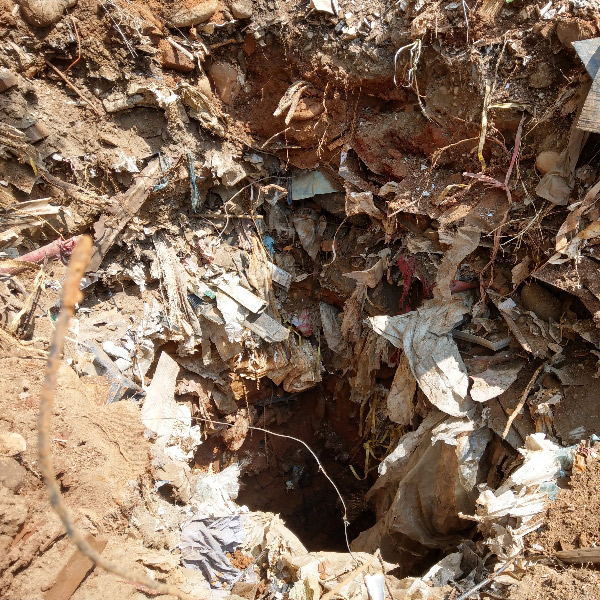
The site is located in Hsinchu County, where extensive illegal dumping of waste was uncovered progressively during land preparation by the township office. The waste covers approximately 10 hectares across 22 land parcels within the Boluo, Fanhu, and Yongan sections of Hunan Village, Hukou Township.
Following the approval of the work plan, the project proceeded with a systematic approach including surface clearing, geophysical surveys, phased excavation, and soil sampling. These steps aimed to delineate the extent, types, and contamination levels of the waste, leading to the formulation of a comprehensive disposal plan for subsequent cleanup and environmental restoration.
Site Status
The waste includes general refuse (e.g., household garbage), industrial waste, and construction debris, such as waste cotton, tires, circuit boards, plastics, suspected sludge, bricks, tiles, concrete, mixed construction materials, and reinforced concrete. The illegal dumping likely occurred intermittently between 1989 and 1996.
Approach
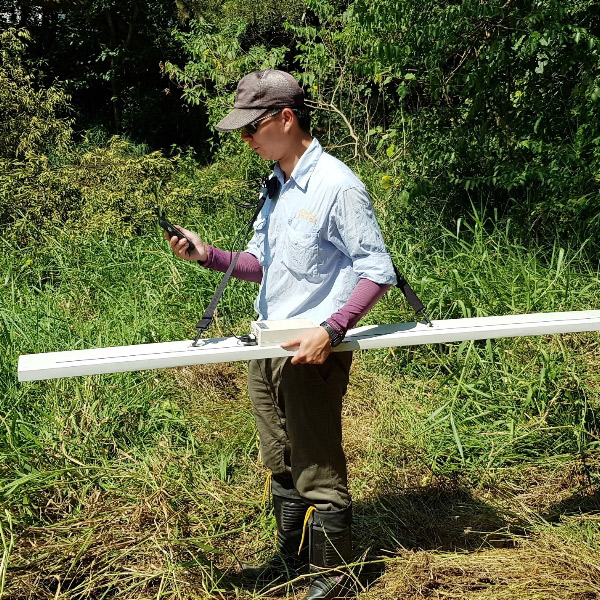
GTE conducted a comprehensive site investigation using electromagnetic (EM) induction to delineate the boundaries of the buried waste. This was followed by electrical resistivity tomography (ERT) to understand the subsurface geological conditions and determine the depth of the buried materials.
An adaptive cluster grid approach was applied to guide full-scale excavation and systematic sampling with excavators across the entire site. The investigation estimated a total waste volume of approximately 60,000 cubic meters, including 14,000 m³ of construction debris, 46,000 m³ of general industrial waste, and about 810 metric tons of hazardous industrial waste.
To further clarify the characteristics of the buried and stockpiled waste, certified laboratories conducted analyses for heavy metals, organic pollutants, pesticides, and dioxins. Based on the findings, GTE assisted the client in developing detailed plans for excavation, waste classification, transportation, and temporary storage, and completed a formal disposal plan submitted to the Environmental Protection Bureau.
Through a systematic investigation and data-driven analysis, uncertainties in estimating the volume of waste to be removed were significantly reduced. This provided a solid foundation for a complete evaluation of the buried waste and the formulation of an actionable disposal strategy, ensuring the smooth and efficient execution of the subsequent cleanup and environmental restoration work.