
資源探測與評估
Carbon Storage Monitoring

Monitoring Objectives
In response to the 2050 net-zero emissions goal and recognizing that fossil fuels remain a primary energy source, reducing CO₂ emissions requires not only carbon offsetting through natural sinks but also the adoption of negative emissions technologies. Among these, Carbon Capture and Storage (CCS) is a key technology for reducing atmospheric CO₂ levels.
To address geological uncertainties, injection safety, and environmental risks, appropriate long-term monitoring techniques must be employed to ensure the long-term stability of underground carbon storage. This enables real-time tracking of geological conditions and CO₂ migration, providing essential data for effective risk management.
Monitoring Plan
Monitoring plans must account for both temporal and spatial scales. Depending on the injection phase, appropriate monitoring technologies should be selected, and integrated multi-scale models developed to accurately predict CO₂ distribution.
A comprehensive and reliable monitoring approach combines seismic, gravity, electrical, and electromagnetic survey methods, offering complementary insights into subsurface conditions.
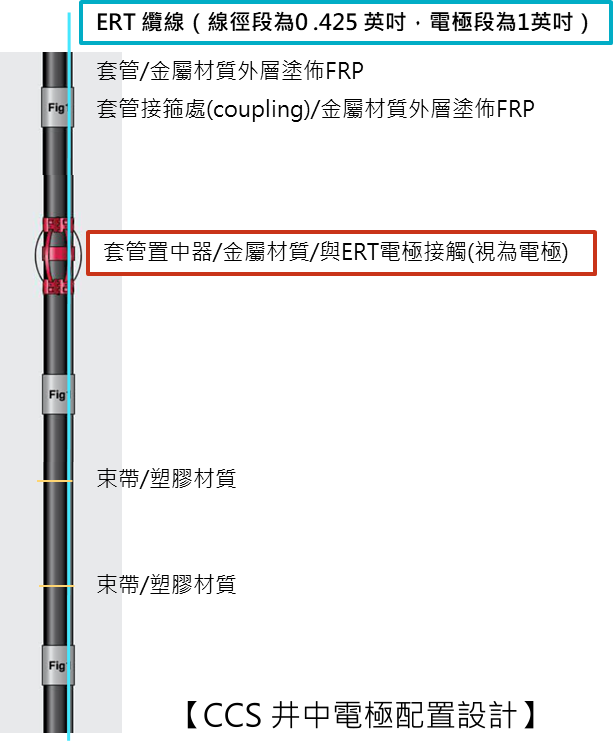
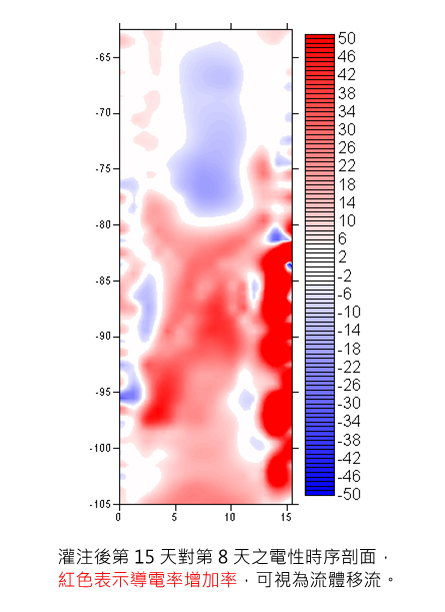
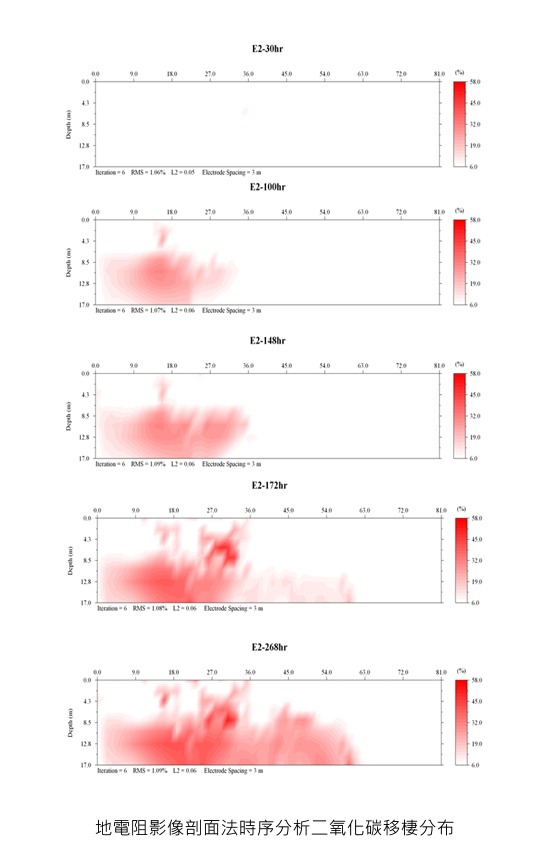
In particular, Time-Lapse Cross-Hole Electrical Resistivity Tomography (TL-CHERT) is especially valuable during early-stage monitoring. This method enables effective real-time visualization to dynamically track electrical changes and detect potential surface leakage pathways. The results provide crucial scientific baseline data that not only guide technical decisions but also form the foundation for transparent risk communication with stakeholders.
Approach
Since 2024, GTE has specialized in CCS electrical monitoring, actively introducing cutting-edge detection concepts and technologies. The company has undertaken projects commissioned by the National Science and Technology Council, National Central University, and other institutions, focusing on the development and application of high-precision downhole monitoring systems. These systems cover site assessment, injection process monitoring, and early warning mechanisms for potential leakage events.
By leveraging innovative technologies, GTE enhances the safety and long-term stability of carbon storage operations while minimizing potential environmental impacts.
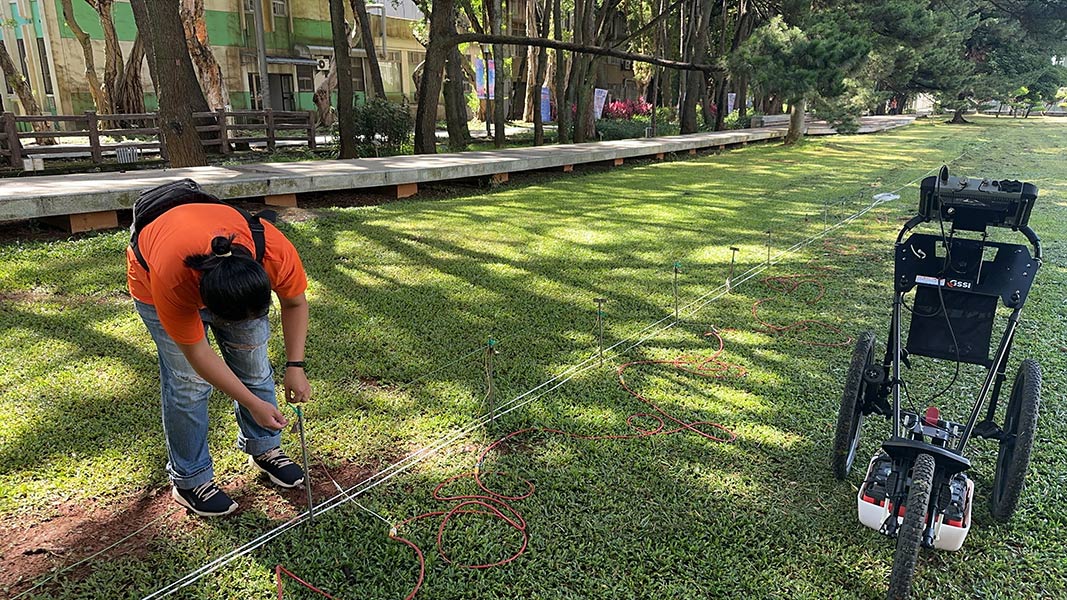
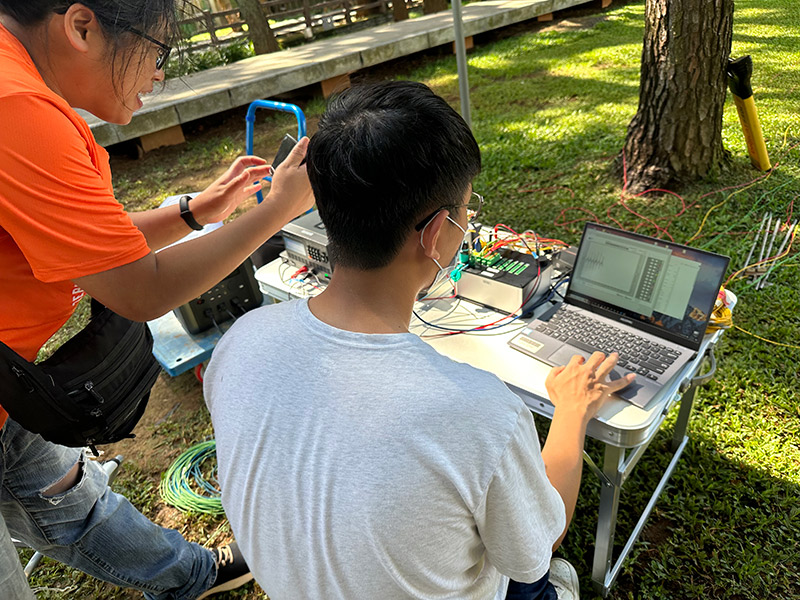
To support these efforts, GTE has established a demonstration field site and is continuously advancing non-seismic geophysical monitoring techniques such as TL-CHERT and TL-ERT. Collaborating closely with seismic monitoring teams and wellbore monitoring experts, GTE integrates static and dynamic data to build characteristic conceptual models, conduct numerical simulations and validations, and ultimately strengthen engineering verification and long-term risk management frameworks.